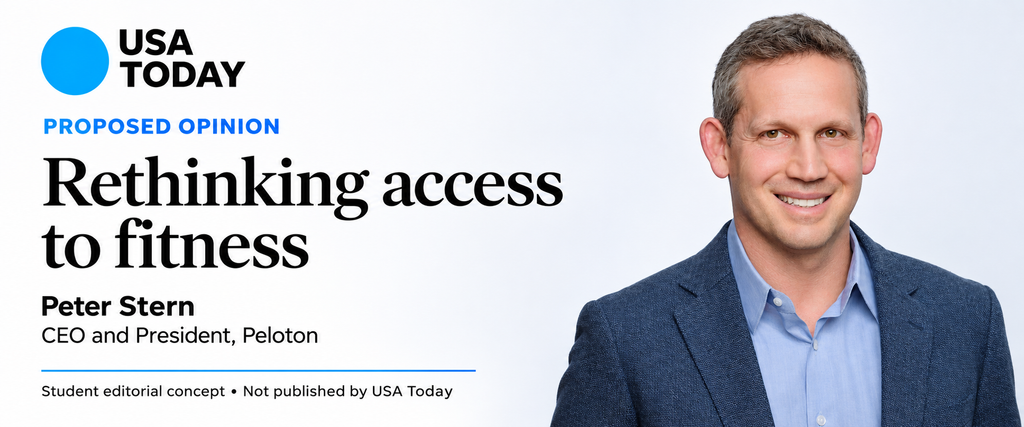
The Fitness Industry Needs to Rethink What Access Really Means
By Peter Stern
Every January, the fitness industry encourages people to set new goals, commit to a routine and become a healthier version of themselves. As the CEO of a fitness company, I believe in the value of that encouragement, but I also believe we need to think more critically about what we are asking people to overcome. When our message focuses entirely on motivation and discipline, we overlook the circumstances that can make exercise difficult to begin and even harder to sustain.
For a parent balancing child care with work, finding time to exercise may require support that a workout program cannot provide. For someone with a disability, participating may depend on whether an instructor or experience accommodates their needs. For someone managing a limited budget, the decision may come down to which expenses take priority. These situations require us to consider whether the opportunities we offer are practical for the people we hope to reach.
If the fitness industry wants to make well-being more accessible, we need to evaluate our efforts through the experiences of the people who face these barriers.
That responsibility extends to Peloton. As a company that sells premium fitness experiences, we cannot assume that making our products available means we have made fitness accessible. Our responsibility also involves considering how our resources can benefit people who may never purchase our equipment or become paying members.
Through our Wellbeing for Life initiative, Peloton reported reaching more than 614,000 people between fiscal 2022 and fiscal 2025 through content, nonprofit partnership programming and community activities. While that reach represents an important part of our work, it also requires us to consider what those numbers tell us about the experience of participating.
Reaching someone through an event or program does not establish whether they found an activity they could continue. Similarly, a positive experience can provide valuable feedback without demonstrating a lasting improvement in health. As business leaders, we should be willing to explain those distinctions and use them to guide where we invest next.
I believe our industry can strengthen its approach in three ways.
First, we should give community organizations a meaningful role in defining what support looks like. Companies bring resources and expertise, but local partners bring an understanding of the people they serve. A company may be prepared to donate equipment when a community organization needs funding, instructor support or accessible programming. Effective investment begins with listening closely enough to adjust the original plan.
Second, we should consider what happens after a program launches. An introductory event can create interest, but continued participation requires resources beyond that first experience. Our investments should account for the staffing, programming and support that allow an opportunity to remain useful over time.
Third, we should communicate results with enough detail for people to understand what we have accomplished. That includes distinguishing between the number of people reached and the number who participated regularly, explaining how outcomes were measured and acknowledging what we still do not know. Transparency gives communities and companies a stronger foundation for deciding what deserves continued support.
A successful business can contribute to a broader social benefit, but that contribution should be meaningful regardless of whether the people involved eventually become customers. Community partnerships should be evaluated according to the needs they address and the value they create for participants.
As we encourage people to make room for movement in their lives, we should consider what our own commitments make possible. A more responsible fitness industry would measure its progress by whether more people have a realistic opportunity to participate and continue on terms that work for them.
Strategy Note
This piece focuses on equitable access to fitness as a social impact issue, connecting Peloton’s Wellbeing for Life initiative to the broader discussion. The tone is thoughtful and direct, allowing the CEO to acknowledge the limitations of a premium fitness business while presenting specific ways the industry can improve. The opening connects to familiar New Year’s messaging, making the topic approachable for a general audience such as USA Today readers. Recommendations around community involvement, sustained investment and transparent reporting give the piece a clear position beyond raising awareness. The references to Peloton also provide relevant context without turning the article into a product promotion.